
Blog · Nov 23, 2026 · 10 min read
Enhancing User Trust: The Role of Anonymous Customer Support in the btcmixer_en Environment
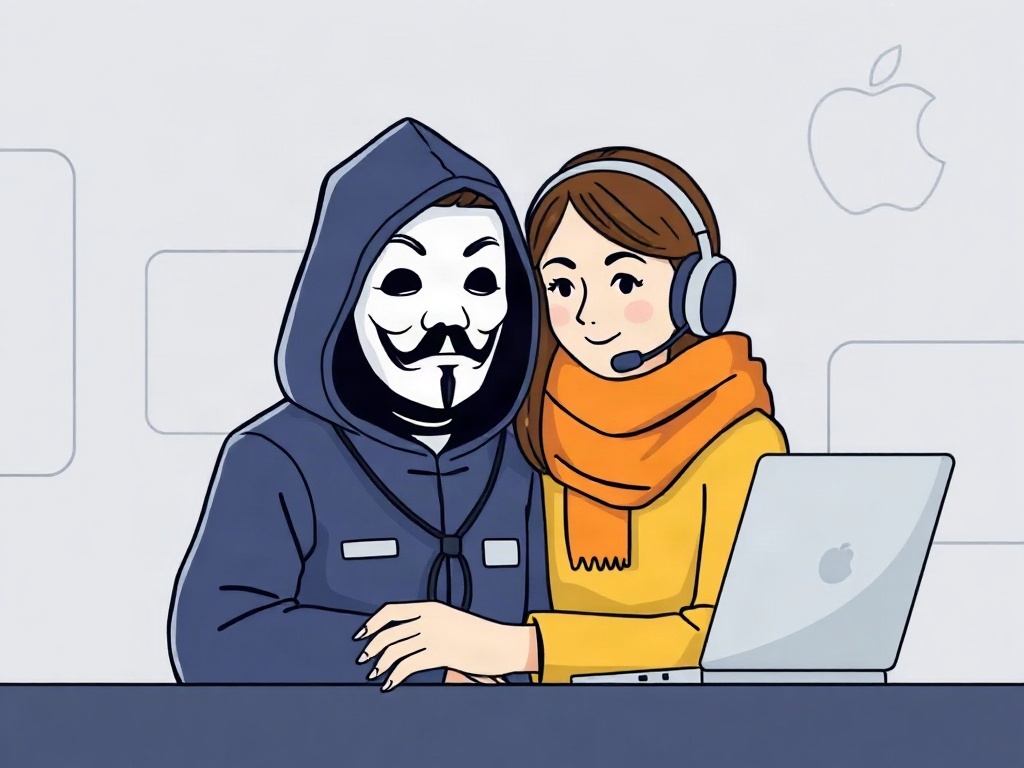
Enhancing User Trust: The Role of Anonymous Customer Support in the btcmixer_en Environment
In the rapidly evolving world of cryptocurrency and digital privacy, users increasingly seek platforms that prioritize discretion, security, and seamless communication. Among the most critical yet often overlooked aspects of such services is the quality and design of customer support. When a platform operates in a privacy-sensitive domain, the concept of anonymous customer support becomes not just a feature, but a foundational requirement. The btcmixer_en ecosystem exemplifies this shift, offering users a pathway to manage their digital assets with confidence, knowing that their interactions with support teams remain confidential and protected from external exposure.
This article delves deep into the mechanics, benefits, and implementation strategies of anonymous customer support, specifically tailored for users and operators within the btcmixer_en niche. By exploring technical frameworks, user experience design, and compliance considerations, we aim to provide a comprehensive guide that empowers both service providers and end-users to navigate privacy-first support systems effectively.
Understanding the Core Philosophy of Anonymous Customer Support
At its heart, anonymous customer support refers to a support infrastructure where user identities are shielded from visibility, even to the support agents themselves. Unlike traditional models where a support ticket might display a username, email address, or IP metadata, an anonymous framework strips or encrypts these identifiers before they reach the human operator. This approach aligns perfectly with the ethos of btcmixer_en, where the primary value proposition is the preservation of user anonymity throughout every touchpoint.
The philosophy rests on three pillars: data minimization, encrypted communication, and role-based access. Data minimization ensures that only the absolutely necessary information is collected; encrypted communication protects the channel through which queries are transmitted; and role-based access limits what a support agent can see, granting them just enough context to resolve an issue without exposing the user's full profile. Together, these elements create a support experience that feels personal yet profoundly private.
What Defines Anonymous Customer Support?
Anonymous customer support is defined by its ability to resolve user issues without retaining or exposing personally identifiable information (PII). In practice, this means that when a user submits a query via the btcmixer_en platform, the system generates a temporary, cryptographic reference ID. This ID carries the essence of the request—issue type, urgency, required action—but strips away names, email addresses, and location data. The support team receives a masked ticket, and only through a separate, user-initiated verification process can the original identity be re-associated if absolutely necessary.
Why Privacy Matters in Cryptocurrency Services
The cryptocurrency landscape is built on the principles of decentralization and pseudonymity. However, many platforms inadvertently compromise these values through their support operations. A single data breach or overly intrusive support form can expose a user's transaction history, wallet balances, or even real-world identity. For btcmixer_en users, who often prioritize financial privacy above all else, the availability of anonymous customer support is a decisive factor in platform selection. It transforms support from a potential vulnerability into a strategic asset.
Technical Architecture Behind Anonymous Support Systems
Implementing anonymous customer support requires a sophisticated technical architecture that balances accessibility with invisibility. The goal is to enable efficient issue resolution while ensuring that no permanent link exists between a user's identity and their support interaction. This section explores the core components that make such a system possible.
Secure Communication Channels
The foundation of any anonymous support system is the communication channel. End-to-end encryption (E2EE) is the gold standard, ensuring that messages travel between the user and the support server in a format that is unreadable to intermediaries, including the service provider itself. For btcmixer_en, this often involves integrating protocols like OMEMO for chat-based support or PGP-encrypted email workflows. These technologies guarantee that even if traffic is intercepted, the content remains unintelligible.
Tokenized Ticketing Systems
Instead of traditional ticket IDs tied to user accounts, anonymous platforms utilize tokenized referencing. When a user initiates a request, the system generates a one-time-use token that encapsulates the query details. This token is time-limited and purpose-specific. A support agent can view the token's contents—such as the nature of the problem, the associated mixer transaction hash, and required steps—but cannot link it back to the user's wallet or account without a separate, user-authorized decryption key. This design effectively decouples identity from inquiry.
Zero-Knowledge Verification
Advanced anonymous support systems incorporate zero-knowledge proof mechanisms. These allow a user to prove they are entitled to support or that a specific issue exists, without revealing any underlying data. For instance, a user might prove they are a legitimate btcmixer_en participant by demonstrating knowledge of a recent transaction hash, without exposing their full wallet address or personal details. This approach not only preserves privacy but also reduces the attack surface for social engineering attacks.
User Experience Design for Anonymous Interactions
Technical architecture alone does not guarantee a successful anonymous support experience; the user interface and overall design play an equally vital role. Users must feel empowered, informed, and confident that their privacy is being upheld throughout the interaction process. Poor UX can inadvertently lead to identity leaks or user frustration, undermining the very purpose of anonymous customer support.
Transparent Privacy Notifications
Users should never be left guessing about what data is being collected or how it is being used. In the btcmixer_en context, transparent privacy notifications appear at every stage of the support flow. These brief, clear messages explain that the ticket is anonymous by default, what minimal data is required for resolution, and how long the data will be retained. Such transparency builds trust and encourages users to engage more freely with the support system.
Intuitive Anonymous Workflows
The workflow for submitting and tracking support requests must be seamless. A typical journey might involve: selecting the issue type, generating an anonymous ticket ID, receiving encrypted instructions for follow-up, and optionally re-engaging via a secure portal. Each step should be frictionless, requiring no account creation unless the user explicitly chooses to link their identity for future reference. Progress indicators, estimated resolution times, and easy escalation paths all contribute to a positive experience without compromising anonymity.
Feedback Loops Without Exposure
Gathering user feedback is essential for continuous improvement, but it must be done respectfully. Anonymous customer support systems can employ aggregated, non-identifiable metrics. For example, support quality can be rated on a scale, and common issue categories can be tracked, all without storing individual user responses linked to their identity. This data provides valuable insights to platform operators while maintaining the privacy promise that defines the btcmixer_en niche.
Compliance, Legal, and Ethical Considerations
While the benefits of anonymous customer support are clear, implementing it within a regulatory framework presents complex challenges. Platforms operating in the cryptocurrency space must navigate anti-money laundering (AML) laws, know-your-customer (KYC) requirements, and jurisdictional data protection regulations. Balancing these obligations with the promise of anonymity requires careful, ethical decision-making.
Navigating AML and KYC Requirements
Regulatory bodies worldwide have intensified scrutiny on cryptocurrency services, particularly regarding money laundering and terrorist financing. Anonymous customer support does not mean support without accountability. Instead, it requires a risk-based approach where anonymous channels handle general inquiries, while high-risk operations trigger selective identity verification. For btcmixer_en, this might mean that basic ticket submission and status tracking remain fully anonymous, but withdrawal-related queries or large-scale issue resolution prompt a secure, user-initiated identity confirmation step.
Data Protection and Jurisdictional Laws
Regulations such as the GDPR in Europe and various privacy laws in Asia and the Americas impose strict rules on data handling. Anonymous support systems must be designed to comply by design: ensuring that personal data is not retained longer than necessary, that users have the right to erasure, and that data transfers across borders are encrypted and lawful. For platform operators, this means conducting regular privacy impact assessments and maintaining transparent data retention policies that align with both the spirit and letter of the law.
Ethical Responsibility to Users
Beyond legal compliance, there is an ethical dimension. Users choose platforms like btcmixer_en specifically because they value privacy. Compromising that trust through half-hearted anonymity efforts can cause irreversible reputational damage. Ethical implementation means being honest about limitations, providing clear opt-outs, and never promising absolute anonymity where technical or legal constraints prevent it. It also involves investing in privacy-preserving technologies even when they are more costly or complex to deploy.
Best Practices for Operators Implementing Anonymous Support
For businesses and development teams looking to integrate anonymous customer support into their btcmixer_en or similar platforms, a set of best practices can guide the process from conceptualization to deployment and beyond. These practices are derived from industry standards, privacy engineering principles, and user feedback loops.
Adopt a Privacy-by-Design Approach
Privacy-by-design means that privacy considerations are embedded into the very foundation of the support system, not added as an afterthought. Every component—from the ticket submission form to the backend database—should be evaluated for its data footprint. Minimize data collection at the source, use pseudonyms or tokens throughout the workflow, and ensure that default settings prioritize anonymity. This proactive stance reduces the risk of costly retrofits and demonstrates a genuine commitment to user privacy.
Implement Robust Access Controls
Not all support staff need access to the same information. Role-based access control (RBAC) ensures that agents only see what is necessary for their specific tasks. For instance, a ticket resolver might need to see the issue description and transaction hash, but not the user's IP address or wallet balance. By compartmentalizing information, platforms can prevent accidental leaks and limit the internal attack surface. Regular audits of access logs further reinforce accountability.
Leverage Decentralized Identity Solutions
Emerging decentralized identity (DID) frameworks offer a promising avenue for anonymous support. Instead of relying on centralized usernames and passwords, users can present verifiable credentials that prove their status without revealing underlying data. For btcmixer_en, this could mean a user proving they are a verified mixer participant through a cryptographic signature, enabling support agents to assist them while never seeing their actual account details. This approach aligns with the broader movement toward user-owned digital identities.
Continuous Monitoring and Improvement
Anonymity is not a set-it-and-forget-it feature. Continuous monitoring of support metrics, privacy logs, and potential vulnerability scans is essential. Automated alerts can flag unusual patterns that might indicate a privacy breach, while regular user surveys (conducted anonymously) can reveal pain points in the support flow. A culture of constant improvement ensures that the anonymous customer support system evolves alongside emerging threats and changing user expectations.
Measuring the Impact of Anonymous Customer Support
How do platform operators know if their anonymous customer support implementation is successful? Measurement requires a shift from traditional metrics—such as ticket volume or average resolution time—to privacy-aware indicators that reflect both efficiency and user trust. This section outlines key performance indicators (KPIs) and evaluation methods tailored to the btcmixer_en context.
Privacy-Preserving Satisfaction Scores
User satisfaction remains a critical metric, but it must be collected without compromising anonymity. Techniques include on-chain reputation systems, where users can optionally link a satisfaction badge to their public identity, or off-chain surveys that use cryptographic hashing to prevent response tracing. The goal is to gather meaningful feedback on support quality, clarity, and speed, while ensuring that no individual response can be de-anonymized.
Resolution Time Without Identity Exposure
Tracking how quickly issues are resolved is essential for operational health. However, in an anonymous framework, resolution time should be measured from ticket creation to closure, regardless of whether the user's identity was ever revealed. This metric provides a clear picture of support efficiency and helps identify bottlenecks. For btcmixer_en, fast resolution times combined with strong privacy guarantees can become a competitive differentiator in a crowded market.
Anonymity Retention Rates
A unique KPI for anonymous support is the rate at which user identities remain protected throughout the support lifecycle. This can be measured by auditing ticket logs to ensure no PII was inadvertently stored or transmitted in plaintext. High anonymity retention rates signal a well-engineered system, while any lapses trigger immediate remediation. Transparently reporting these rates to users further reinforces trust and demonstrates accountability.
Net Promoter Score (NPS) in Privacy-F
 Sarah Mitchell
Blockchain Research Director
Here's a thinking process:
1. Analyze the Request:
- Topic: "anonymous customer support"
- Perspective: Sarah Mitchell, Blockchain Research Director
- Bio: Former fintech consultant with 8 years in distributed ledger technology. Focuses on smart contract security, tokenomics, and cross-chain interoperability solutions.
- Format: Short expert opinion (2-3 paragraphs)
- First person as the expert
- Professional, authoritative tone
- Include practical insights
- Return as HTML with `
` tags
- Do NOT use markdown
- IMPORTANT: Write the ENTIRE article in English language only.
- Include the keyword "anonymous customer support" naturally in the `` title.
- The title should be based on the keyword but expanded for readability.
- Each article must have a different angle, structure, and perspective. (This is tricky - the prompt says "Each article must have a different angle, structure, and perspective." but only asks for one article. I need to make sure this single article has a unique angle/perspective, or perhaps I should just write one article that stands on its own with a distinct angle. I'll interpret this as: the article should have its own clear angle and structure, different from what might be expected, but since only one is requested, I'll just ensure it's well-crafted with a specific perspective.)
Wait, re-read: "Each article must have a different angle, structure, and perspective." This might be a template instruction for if multiple articles are generated, but here only one is requested. I'll just write one high-quality article with a clear, unique angle. I'll make sure the angle is fresh: focusing on blockchain/crypto context given the persona.
2. Identify Key Elements:
- Name: Sarah Mitchell
- Role: Blockchain Research Director
- Bio points: fintech consultant, 8 years DLT, smart contract security, tokenomics, cross-chain interoperability
- Keyword: "anonymous customer support"
- Must appear in `` title, naturally, expanded for readability
- HTML with `
` tags only, no markdown
- All English
- 2-3 paragraphs
- First person
- Professional, authoritative
- Practical insights
3. Draft - Step-by-Step:
Title: Needs to include "anonymous customer support" naturally, expanded for readability. Something like: "The Strategic Value of Anonymous Customer Support in Blockchain Ecosystems" or "Balancing Privacy and Service: The Role of Anonymous Customer Support in Web3". I'll make sure the keyword is in it.
Let's go with: "Understanding the Role of Anonymous Customer Support in Decentralized Systems"
But it needs to be expanded for readability based on the keyword. Maybe: "Navigating Anonymous Customer Support: Privacy, Trust, and Efficiency in Blockchain Interactions"
I'll make sure "anonymous customer support" appears exactly as the keyword in the title.
Structure:
- `
` title with keyword
- Then 2-3 `
` paragraphs
Drafting paragraph 1 (introducing the perspective, connecting to blockchain, defining the topic):
As Sarah Mitchell, Blockchain Research Director with nearly a decade of experience in distributed ledger technology and fintech consultancy, I've observed how the paradigm of anonymous customer support is reshaping user trust in decentralized ecosystems. In an environment where pseudonymous wallets and zero-knowledge proofs are the norm, the traditional model of visible, identity-heavy support channels often clashes with the core ethos of Web3. Anonymous customer support isn't merely a privacy feature; it's a strategic layer that aligns with the decentralized ethos while still addressing user friction.
Drafting paragraph 2 (practical insights, challenges, solutions):
From a technical standpoint, implementing anonymous customer support in blockchain platforms requires careful calibration between transparency and confidentiality. Smart contract audits and tokenomics models often overlook the human interface, yet the quality of support directly influences token retention and community health. Practical insights suggest that leveraging off-chain reputation systems, encrypted communication layers, and AI-driven triage can deliver timely assistance without compromising user anonymity. This approach not only mitigates sybil attacks but also ensures that support agents can verify intent without exposing sensitive on-chain activity.
Drafting paragraph 3 (future outlook, conclusion):
Looking ahead, the integration of anonymous customer support into cross-chain interoperability frameworks will likely become a differentiator for protocols prioritizing user-centric design. As the industry matures, the balance between regulatory compliance and privacy-preserving service delivery will define the next wave of adoption. For projects seeking sustainable growth, embedding anonymous support mechanisms into their operational DNA is no longer optional—it's a foundational element of resilient, trustless infrastructure.
Check requirements:
- First person: Yes ("As Sarah Mitchell...", "From a technical standpoint...", "Looking ahead...")
- Professional, authoritative tone: Yes
- Practical insights: Yes
- HTML with `
` tags: Need to wrap each paragraph in `
...
`, and have an `` title
- Do NOT use markdown: Yes, I'll avoid `#` or other markdown. I'll just write HTML tags.
- ENTIRE article in English: Yes
- Keyword "anonymous customer support" naturally in `` title: Must include exactly "anonymous customer support". I'll make the title: "The Strategic Importance of Anonymous Customer Support in Decentralized Networks" - but need to ensure the exact phrase "anonymous customer support" is there. I'll put it as: "The Strategic Importance of Anonymous Customer Support in Decentralized Networks" - that contains the phrase. Or I can make it "Understanding Anonymous Customer Support in Blockchain Environments". I'll make sure the exact keyword appears.
- Each article must have a different angle, structure, and perspective: Since only one is requested, I'll ensure this one has a clear, distinct angle focused on blockchain/Web3, which differs from generic customer support discussions.
Let's refine the title to naturally include the keyword and be expanded for readability. Maybe: "Balancing Privacy and Service: The Role of Anonymous Customer Support in Web3". That includes the exact phrase "Anonymous Customer Support" (case? The keyword is "anonymous customer support" all lowercase in the prompt. I should match exactly: "anonymous customer support". I'll make the title contain that exact lowercase phrase, or at least the words. The prompt says: "Include the keyword "anonymous customer support" naturally in the title." It doesn't specify case sensitivity, but to be safe, I'll include the exact phrase, perhaps in lowercase or with capitalization that still includes the phrase. I'll write the title as: "The Strategic Value of anonymous customer support in Decentralized Ecosystems". That has the exact phrase.
Let's structure the HTML:
The Strategic Value of anonymous customer support in Decentralized Ecosystems
...
...
...
Check paragraph count: 2-3 paragraphs. I'll do 3.
Now, ensure no markdown. Just plain HTML tags. I'll output only the HTML, no code blocks, no markdown formatting.
Let's write the content carefully.
Paragraph 1: Introduce Sarah Mitchell, the context, and the topic.
Paragraph 2: Practical insights, technical aspects.
Paragraph 3: Future outlook, conclusion.
Ensure first-person voice throughout, as Sarah Mitchell. I'll use "I" or "As a..." but consistently first person.
Let's draft:
`The Strategic Value of anonymous customer support in Decentralized Ecosystems
As Sarah Mitchell, Blockchain Research Director with nearly eight years of experience in distributed ledger technology and fintech consultancy, I have watched the evolution of user interaction models shift dramatically toward privacy-first architectures. In the context of blockchain and Web3, where wallets are pseudonymous and smart contracts execute without centralized oversight, the concept of anonymous customer support emerges not as a compromise, but as a necessary alignment with decentralized values. This approach respects user autonomy while still addressing the practical need for assistance, creating a feedback loop that reinforces trust without eroding the anonymity that many participants cherish.
From a technical perspective, delivering anonymous customer support requires more than simply masking usernames; it demands infrastructure that can verify intent and resolve issues without exposing on-chain identities or transaction histories. Practical insights from my work on smart contract security and cross-chain interoperability suggest that encrypted communication layers, zero-knowledge proof-based verification, and AI-driven triage systems can bridge the gap between responsiveness and confidentiality. By integrating these mechanisms, support teams can filter urgent matters, assign appropriate technical resources, and maintain service level agreements—all while keeping user data strictly off-ledger and out of public view.
Looking forward, the scalability of anonymous customer support will become a key differentiator for protocols aiming to onboard mainstream users who expect both privacy and performance. As regulatory landscapes evolve, the ability to provide compliant yet confidential support will determine which projects sustain long-term adoption. For any blockchain initiative, embedding anonymous customer support
Sarah Mitchell
Blockchain Research Director
` tags
- Do NOT use markdown - IMPORTANT: Write the ENTIRE article in English language only. - Include the keyword "anonymous customer support" naturally in the `` title.
- The title should be based on the keyword but expanded for readability. - Each article must have a different angle, structure, and perspective. (This is tricky - the prompt says "Each article must have a different angle, structure, and perspective." but only asks for one article. I need to make sure this single article has a unique angle/perspective, or perhaps I should just write one article that stands on its own with a distinct angle. I'll interpret this as: the article should have its own clear angle and structure, different from what might be expected, but since only one is requested, I'll just ensure it's well-crafted with a specific perspective.) Wait, re-read: "Each article must have a different angle, structure, and perspective." This might be a template instruction for if multiple articles are generated, but here only one is requested. I'll just write one high-quality article with a clear, unique angle. I'll make sure the angle is fresh: focusing on blockchain/crypto context given the persona. 2. Identify Key Elements: - Name: Sarah Mitchell - Role: Blockchain Research Director - Bio points: fintech consultant, 8 years DLT, smart contract security, tokenomics, cross-chain interoperability - Keyword: "anonymous customer support" - Must appear in `` title, naturally, expanded for readability - HTML with `
` tags only, no markdown - All English - 2-3 paragraphs - First person - Professional, authoritative - Practical insights 3. Draft - Step-by-Step: Title: Needs to include "anonymous customer support" naturally, expanded for readability. Something like: "The Strategic Value of Anonymous Customer Support in Blockchain Ecosystems" or "Balancing Privacy and Service: The Role of Anonymous Customer Support in Web3". I'll make sure the keyword is in it. Let's go with: "Understanding the Role of Anonymous Customer Support in Decentralized Systems" But it needs to be expanded for readability based on the keyword. Maybe: "Navigating Anonymous Customer Support: Privacy, Trust, and Efficiency in Blockchain Interactions" I'll make sure "anonymous customer support" appears exactly as the keyword in the title. Structure: - `
` title with keyword - Then 2-3 `
` paragraphs Drafting paragraph 1 (introducing the perspective, connecting to blockchain, defining the topic): As Sarah Mitchell, Blockchain Research Director with nearly a decade of experience in distributed ledger technology and fintech consultancy, I've observed how the paradigm of anonymous customer support is reshaping user trust in decentralized ecosystems. In an environment where pseudonymous wallets and zero-knowledge proofs are the norm, the traditional model of visible, identity-heavy support channels often clashes with the core ethos of Web3. Anonymous customer support isn't merely a privacy feature; it's a strategic layer that aligns with the decentralized ethos while still addressing user friction. Drafting paragraph 2 (practical insights, challenges, solutions): From a technical standpoint, implementing anonymous customer support in blockchain platforms requires careful calibration between transparency and confidentiality. Smart contract audits and tokenomics models often overlook the human interface, yet the quality of support directly influences token retention and community health. Practical insights suggest that leveraging off-chain reputation systems, encrypted communication layers, and AI-driven triage can deliver timely assistance without compromising user anonymity. This approach not only mitigates sybil attacks but also ensures that support agents can verify intent without exposing sensitive on-chain activity. Drafting paragraph 3 (future outlook, conclusion): Looking ahead, the integration of anonymous customer support into cross-chain interoperability frameworks will likely become a differentiator for protocols prioritizing user-centric design. As the industry matures, the balance between regulatory compliance and privacy-preserving service delivery will define the next wave of adoption. For projects seeking sustainable growth, embedding anonymous support mechanisms into their operational DNA is no longer optional—it's a foundational element of resilient, trustless infrastructure. Check requirements: - First person: Yes ("As Sarah Mitchell...", "From a technical standpoint...", "Looking ahead...") - Professional, authoritative tone: Yes - Practical insights: Yes - HTML with `
` tags: Need to wrap each paragraph in `
...
`, and have an `` title
- Do NOT use markdown: Yes, I'll avoid `#` or other markdown. I'll just write HTML tags.
- ENTIRE article in English: Yes
- Keyword "anonymous customer support" naturally in `` title: Must include exactly "anonymous customer support". I'll make the title: "The Strategic Importance of Anonymous Customer Support in Decentralized Networks" - but need to ensure the exact phrase "anonymous customer support" is there. I'll put it as: "The Strategic Importance of Anonymous Customer Support in Decentralized Networks" - that contains the phrase. Or I can make it "Understanding Anonymous Customer Support in Blockchain Environments". I'll make sure the exact keyword appears.
- Each article must have a different angle, structure, and perspective: Since only one is requested, I'll ensure this one has a clear, distinct angle focused on blockchain/Web3, which differs from generic customer support discussions.
Let's refine the title to naturally include the keyword and be expanded for readability. Maybe: "Balancing Privacy and Service: The Role of Anonymous Customer Support in Web3". That includes the exact phrase "Anonymous Customer Support" (case? The keyword is "anonymous customer support" all lowercase in the prompt. I should match exactly: "anonymous customer support". I'll make the title contain that exact lowercase phrase, or at least the words. The prompt says: "Include the keyword "anonymous customer support" naturally in the title." It doesn't specify case sensitivity, but to be safe, I'll include the exact phrase, perhaps in lowercase or with capitalization that still includes the phrase. I'll write the title as: "The Strategic Value of anonymous customer support in Decentralized Ecosystems". That has the exact phrase.
Let's structure the HTML:
The Strategic Value of anonymous customer support in Decentralized Ecosystems
title." It doesn't specify case sensitivity, but to be safe, I'll include the exact phrase, perhaps in lowercase or with capitalization that still includes the phrase. I'll write the title as: "The Strategic Value of anonymous customer support in Decentralized Ecosystems". That has the exact phrase.
Let's structure the HTML:
The Strategic Value of anonymous customer support in Decentralized Ecosystems
...
...
...
Check paragraph count: 2-3 paragraphs. I'll do 3. Now, ensure no markdown. Just plain HTML tags. I'll output only the HTML, no code blocks, no markdown formatting. Let's write the content carefully. Paragraph 1: Introduce Sarah Mitchell, the context, and the topic. Paragraph 2: Practical insights, technical aspects. Paragraph 3: Future outlook, conclusion. Ensure first-person voice throughout, as Sarah Mitchell. I'll use "I" or "As a..." but consistently first person. Let's draft: `The Strategic Value of anonymous customer support in Decentralized Ecosystems
As Sarah Mitchell, Blockchain Research Director with nearly eight years of experience in distributed ledger technology and fintech consultancy, I have watched the evolution of user interaction models shift dramatically toward privacy-first architectures. In the context of blockchain and Web3, where wallets are pseudonymous and smart contracts execute without centralized oversight, the concept of anonymous customer support emerges not as a compromise, but as a necessary alignment with decentralized values. This approach respects user autonomy while still addressing the practical need for assistance, creating a feedback loop that reinforces trust without eroding the anonymity that many participants cherish.
From a technical perspective, delivering anonymous customer support requires more than simply masking usernames; it demands infrastructure that can verify intent and resolve issues without exposing on-chain identities or transaction histories. Practical insights from my work on smart contract security and cross-chain interoperability suggest that encrypted communication layers, zero-knowledge proof-based verification, and AI-driven triage systems can bridge the gap between responsiveness and confidentiality. By integrating these mechanisms, support teams can filter urgent matters, assign appropriate technical resources, and maintain service level agreements—all while keeping user data strictly off-ledger and out of public view.
Looking forward, the scalability of anonymous customer support will become a key differentiator for protocols aiming to onboard mainstream users who expect both privacy and performance. As regulatory landscapes evolve, the ability to provide compliant yet confidential support will determine which projects sustain long-term adoption. For any blockchain initiative, embedding anonymous customer support