
Blog · Nov 23, 2026 · 7 min read
The Best Mixer with Multiple Outputs: A Comprehensive Guide for Modern Audio Engineers
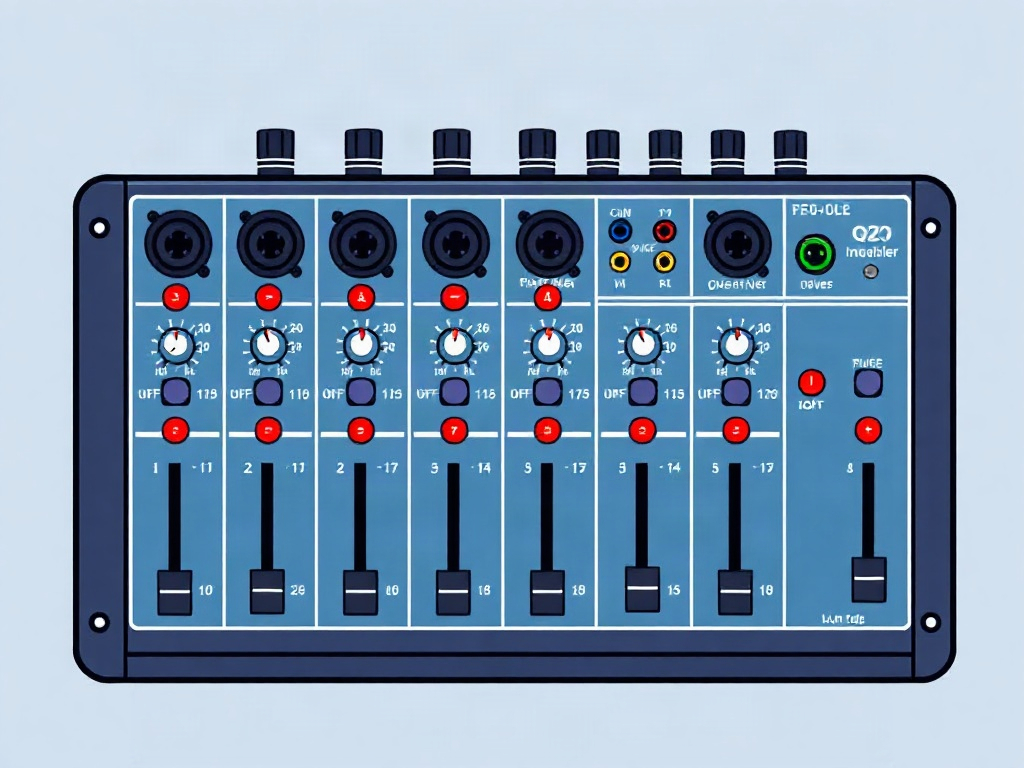
The Best Mixer with Multiple Outputs: A Comprehensive Guide for Modern Audio Engineers
In the dynamic and highly competitive field of professional audio engineering, selecting the right equipment can often feel like navigating a labyrinth. Among the most critical pieces of gear you will ever acquire is your mixing console, specifically one equipped with multiple output capabilities. Whether you are orchestrating a massive live concert, recording a complex studio session, or producing high-fidelity podcasts, having a mixer with multiple outputs is indispensable. This feature allows you to route audio signals simultaneously to various destinations, ensuring that your monitoring, recording, and live sound applications run flawlessly without bottlenecks. Finding the absolute best mixer with multiple outputs requires a deep understanding of your studio's or venue's specific demands, as well as an appreciation for the technical specifications that make these instruments superior to their single-output counterparts.
Understanding the Core Concept: Why Multiple Outputs Matter
To appreciate the significance of a mixer with multiple outputs, one must first understand the fundamental difference between a standard mixer and a multi-output system. A standard mixer typically provides a single main stereo pair of outputs—often labeled as Main L and Main R—which is sufficient for basic recording or simple live monitoring. However, modern audio production demands far more complexity. When you require simultaneous access to the same mix for different purposes—such as sending a dry mix to a digital audio workstation (DAW) for recording, sending a slightly delayed wet mix to stage monitors, and routing a separate subgroup to a multitrack recorder—a single output simply cannot accommodate these diverse workflows.
A mixer with multiple outputs offers the crucial advantage of parallel routing. Instead of forcing you to duplicate the entire signal chain or constantly re-patch cables, you can assign specific channels or subgroups to distinct output pairs. This capability is the backbone of efficient studio management. It prevents signal degradation, reduces the chance of ground loops, and allows engineers to maintain pristine audio quality across all distribution points. Furthermore, in live sound reinforcement, multiple outputs enable the seamless blending of FOH (Front of House) and monitor mixes without cross-talk, ensuring that the audience hears pristine audio while the musicians hear exactly what they need to play.
Key Features to Evaluate When Selecting a Multi-Output Mixer
Channel Strip Architecture and Headroom
When evaluating any mixer, the quality of the channel strips is paramount. In a multi-output mixer, the channel strips must handle significant levels without introducing noise or distortion. Look for high-quality microphone preamps with low self-noise figures, robust EQ sections capable of surgical cuts and broad boosts, and ample gain staging headroom. A channel strip that clips easily under moderate pressure will inevitably cause problems when driving multiple output buses simultaneously. Therefore, investing in a mixer with premium channel strips ensures that your multiple output configurations remain clean, even under the most demanding acoustic environments.
Flexible Output Routing and Patching Capabilities
The defining characteristic of a true multi-output mixer is its routing flexibility. You must look for extensive parallel routing capabilities, including independent main outputs, subgroup outputs, and dedicated aux sends that can be tapped directly to physical outputs. Many modern consoles feature large, color-coded patch bays that allow you to manually route any output to any destination. Additionally, some high-end units offer internal routing matrices, enabling you to configure complex signal flows without ever touching a patch cable. This level of control is essential for maintaining a logical and adaptable signal flow, which is critical when managing numerous output destinations.
Connectivity Standards and I/O Matching
Matching your input and output connectivity standards is vital for a seamless workflow. If your studio uses vintage quarter-inch TRS cables, you need a mixer that accommodates them. Conversely, if you are integrating modern digital interfaces, you must ensure the mixer supports XLR, TRS, and potentially AES/EBU or S/PDIF digital connections. A well-designed multi-output mixer will offer a comprehensive array of inputs and outputs, allowing you to daisy-chain monitors, connect stage boxes, and interface with various digital audio workstations seamlessly. Proper I/O matching eliminates the need for expensive external converters and keeps your signal chain unbroken.
Top Contenders: Evaluating the Market Leaders
With a clear understanding of what to look for, you can now explore the market leaders that consistently deliver exceptional performance in the realm of multi-output mixers. Selecting the right model depends heavily on your specific application, whether it is a compact home studio, a mid-range project room, or a massive live venue. However, several brands have established themselves as the gold standard for providing the best mixer with multiple outputs available today.
Yamaha has long been a dominant force in the professional audio market, and their TF series represents the pinnacle of multi-output console design. The Yamaha TF series offers unparalleled channel strip quality, featuring legendary low-noise preamps and exceptionally transparent EQ sections. What sets the Yamaha TF apart is its incredibly flexible output architecture; it provides up to eight independent stereo output pairs alongside traditional main outputs, allowing for highly complex routing scenarios. Whether you are running a parallel recording setup or a sophisticated live sound matrix, the Yamaha TF delivers pristine audio fidelity across every single output path.
On the other hand, if you are working within a budget-conscious environment without sacrificing too much sonic quality, the Mackie ProFX series is an outstanding choice. Mackie has built a formidable reputation for offering robust, feature-rich consoles at accessible price points. The ProFX units boast excellent channel strips, generous headroom, and a highly configurable output section. While they may not match the sheer number of routing options found in top-tier competitors, they provide enough parallel outputs to satisfy the needs of most studios and live productions. Their ability to handle multiple output buses with minimal noise makes them a favorite among entry-level professionals.
For those who demand absolute precision and uncompromising audio quality, the Soundcraft Vi series offers a compelling alternative. Soundcraft is renowned for its British-engineered approach to mixing, and the Vi series features exceptionally clean channel strips with minimal phase anomalies. The output section on the Vi is meticulously engineered to provide perfectly balanced signals across all distribution points. This ensures that whether you are sending your master bus to a pair of studio monitors, a recording interface, or a distributed speaker system, the audio remains completely free of unwanted coloration or interference.
Setting Up Your Multi-Output System for Optimal Performance
Signal Flow and Patch Bay Configuration
Once you have acquired your ideal mixer, the next step is configuring the signal flow. Proper configuration begins at the patch bay. You must establish a clear hierarchy of your outputs. Typically, you will designate one pair of outputs as your Main Stereo pair for the house system or primary recording destination. The second pair might serve as a dedicated recording output, routed directly to your DAW or tape machine. Subgroups and aux sends should then be patched to these designated output pairs based on their intended function. Taking the time to label each output and cable meticulously will save you countless hours of confusion during live performances or complex studio sessions.
Distributing Signals to DAWs, Monitors, and Stage Boxes
Distributing your mix effectively requires strategic planning. When connecting to a DAW, you typically want a clean, unprocessed stereo output to capture the raw performance. This means routing your master fader to a dedicated output pair that bypasses any onboard effects or inserts, unless you specifically want those processed sounds in your recording. For stage monitors, you might want to tap a subgroup or the master bus via an aux send, ensuring that the monitor engineer gets exactly what they need without exposing the entire mix to the performers. By thoughtfully distributing your multiple outputs, you create a highly efficient and isolated signal chain that protects your audio quality at every turn.
Common Pitfalls and Mistakes to Avoid
Even the most experienced audio engineers can fall victim to common mistakes when setting up a multi-output system. One of the most frequent errors is ignoring impedance matching. When sending line-level signals from your mixer to various destinations, mismatched impedances can cause severe signal degradation, resulting in weak or distorted audio. Always ensure that your output impedances are low relative to your input impedances, particularly when daisy-chaining multiple devices together.

David Chen
Digital Assets Strategist
best mixer with multiple outputs: A Quantitative Strategist's Take on Multi-Output Efficiency
As a quantitative analyst bridging traditional finance and cryptocurrency markets, I've come to view mixer infrastructure not merely as a privacy tool but as a critical component of capital allocation efficiency. The emergence of mixers with multiple outputs introduces a new dimension of optimization, allowing strategists to decompose a single inflow into strategically weighted outflows across addresses, chains, or liquidity pools. From an on-chain analytics standpoint, this structure directly impacts traceability metrics, fee structures, and the overall cost of privacy, making the selection of a best mixer with multiple outputs a data-driven decision rather than a purely operational one.
In practice, the utility of a multi-output mixer hinges on three quantifiable factors: routing diversity, fee transparency, and slippage tolerance. A well-designed platform should permit granular control over output proportions, enabling portfolio rebalancing or tax-loss harvesting scenarios without exposing the full capital movement history. Moreover, integrating these tools within a broader microstructure framework means assessing how output distribution affects order book dynamics and counterparty risk. My experience suggests that the most effective implementations abstract away the complexity while exposing enough on-chain data to validate the optimization thesis in real time.
When evaluating the best mixer with multiple outputs for institutional or high-frequency strategies, I prioritize auditability, smart contract modularity, and the ability to simulate alternative routing scenarios before execution. The ideal solution aligns with our portfolio optimization models, treating each output as a variable in a constrained optimization problem rather than a binary privacy switch. For practitioners navigating the intersection of compliance, capital efficiency, and on-chain privacy, investing in a rigorously tested multi-output mixer is not a luxury—it's a strategic imperative.